Digital PR in 2026: How to Earn Backlinks, Brand Mentions and AI Citations
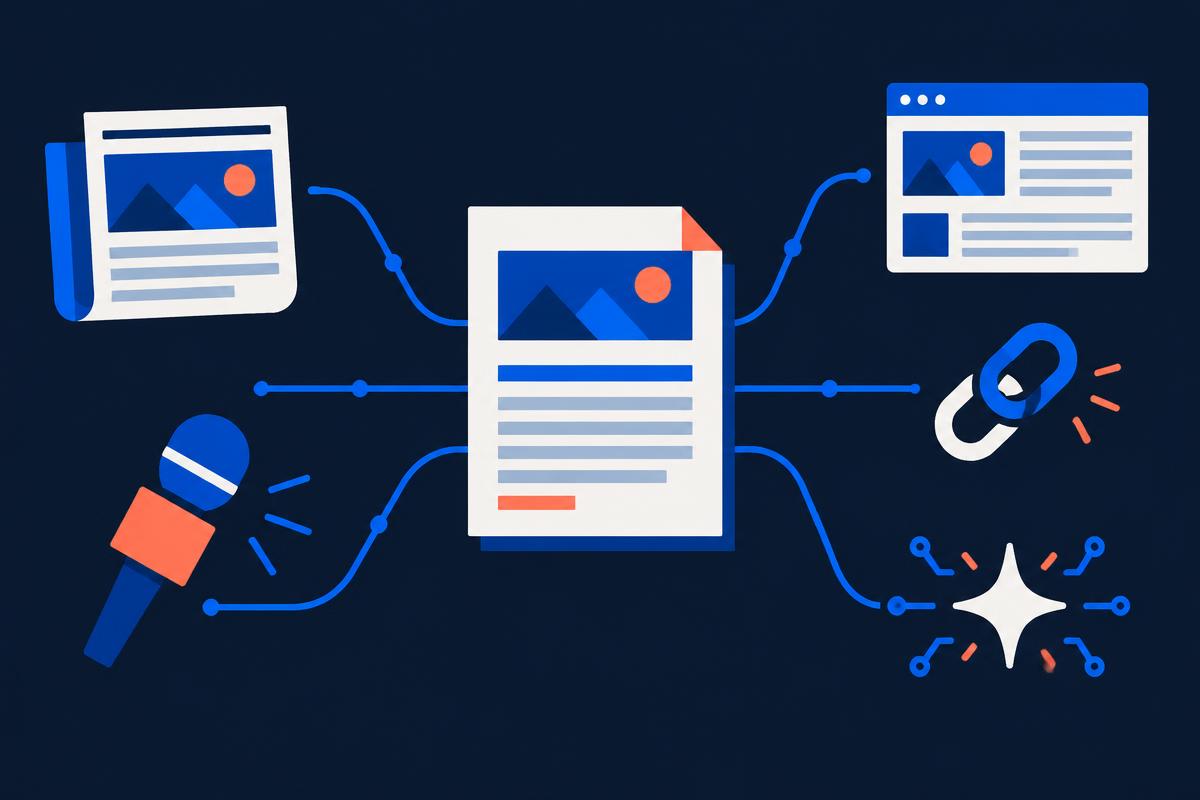
Digital PR has become one of the clearest ways for a business to earn attention that cannot simply be bought. Instead of paying for a placement or sending hundreds of generic link requests, a company creates something genuinely useful, gives journalists a credible reason to cover it, and earns the resulting article, mention or backlink on editorial merit.
That distinction matters in 2026. Search results are crowded with competent summaries, and AI answer engines can combine those summaries in seconds. A brand becomes more memorable when independent publications mention it, experts quote it and useful research points back to it as the original source. This guide explains how digital public relations works, what makes a campaign newsworthy, how to run one without spamming journalists and which results deserve measurement.
What digital PR means in 2026
Digital PR is the practice of earning online coverage by giving publishers a credible story, expert source, dataset or useful asset. The outcome may be a linked article, an unlinked brand mention, a podcast appearance, a newsletter citation or a journalist relationship that produces coverage later. A backlink is valuable, but it is the consequence of a strong story rather than the story's only purpose.
The best campaigns sit between public relations, content, SEO and research. PR supplies the news judgement. Content turns the idea into a clear asset. SEO identifies relevant questions and ensures the source page is discoverable. Research gives other people something specific to quote. Remove any one of those disciplines and the campaign becomes weaker: publicity without a useful destination, content without distribution, or outreach without evidence.
This is also why digital PR is not a thirty-day shortcut to authority. Editors do not owe a company coverage, and a good campaign can be declined because the timing is wrong or the publication already covered the angle. The durable advantage is a repeatable system for producing credible source material and building genuine editorial relationships.
Digital PR versus traditional PR and link building
Traditional PR often concentrates on company announcements, print coverage, events and reputation. Digital PR uses the same editorial principles but designs the campaign for online discovery. The source asset remains available after the news cycle, publications can link directly to the evidence, and the results can be tracked through referral visits, branded searches and assisted conversions.
Ordinary link building starts with a URL and asks where a link might be placed. Digital PR starts with an audience question and asks what new evidence or expert perspective would help a journalist answer it. That order changes the work. The team does not manufacture a thin guest post to hold an anchor phrase; it creates a source worth referencing even if the publisher chooses different wording or mentions the brand without a link.
Earned coverage is not paid placement
A sponsored article can be useful advertising when it is labelled honestly, but it is not earned editorial coverage. Buying links, exchanging products for ranking links or distributing keyword-heavy articles at scale creates a different risk. Google Search Central's spam policies explicitly cover link spam and other attempts to manipulate ranking systems. A sound digital PR strategy gives editors full control over whether they cover the story and how they reference the source.
Brand mentions still have value without a link
A relevant unlinked mention can put the company in front of buyers, trigger branded searches and establish an association between the brand and its area of expertise. Ask politely for a source link when it genuinely helps readers inspect the evidence, but do not treat a nofollow link or an unlinked citation as a failed campaign. Editorial independence is part of what makes the mention credible.
Why editorial coverage matters for search and AI discovery
Search engines use links to discover pages and understand relationships across the web. A relevant editorial link can introduce qualified readers while helping crawlers find the underlying source. More importantly, coverage on independent sites creates corroboration. Your website says what your company believes; third-party reporting shows that another editor found the claim useful enough to examine and publish.
AI discovery increases the value of being easy to verify. Answer engines retrieve passages from multiple sources before composing a response. A clear study on your site, an article interpreting it and independent publications discussing the result give those systems a stronger evidence trail than ten rewritten opinion pieces. No campaign can guarantee an AI citation, but original facts, named authors, transparent methods and consistent entity information make a source easier to understand and attribute.
The commercial effect is broader than rankings. A prospect who encounters the same company in a trade publication, a search result and an AI answer arrives with more context than someone who clicked an isolated ad. That familiarity can improve response rates and shorten evaluation, even when the last-click report credits another channel.
What makes a digital PR story newsworthy
A campaign needs a reason to exist now. 'We published a blog post' is not news. A useful test is to write the likely publication headline before producing the asset. If the headline contains a clear finding, timely change, surprising comparison or practical consequence for a defined audience, the idea may travel. If it only describes your service, it belongs on a sales page.
Original data and research
First-party data is difficult to replace because only your organisation has it. An anonymised analysis of customer questions, a survey with a disclosed sample, a benchmark built from public records or an experiment with a reproducible method can all create a citeable result. Publish the sample size, collection dates, definitions, exclusions and limitations. A smaller transparent study is more defensible than a dramatic statistic with no method.
Look for a decision the audience already struggles with. A SaaS company might analyse onboarding friction across a meaningful sample. A retailer could compare seasonal demand by region. An agency could study the recurring technical problems found across consented audits. The finding should help the reader understand the market, not merely prove that the company should be hired.
Expert commentary and timely analysis
Not every business owns a large dataset. Experienced practitioners can still contribute by explaining a new regulation, platform change or market event quickly and precisely. Good commentary identifies what changed, who is affected, what remains uncertain and what a responsible next step looks like. It avoids predictions presented as facts and makes the expert available for follow-up questions.
Useful tools and visual assets
Calculators, checklists, maps, indexes and clean charts can become reference assets when they save a journalist time. Design them for reuse: give every chart a descriptive title, show the source beneath it and provide an accessible summary. The asset should work without a sales form in front of it. Editors are far more likely to cite a resource their readers can inspect immediately.
A practical digital PR campaign workflow
Start with one audience, one claim and one destination page. A broad campaign aimed at every business publication usually produces generic outreach. A narrow campaign for the editors who cover one sector can offer sharper evidence, language and timing.
If your team needs the research, writing and search architecture planned together, our services connect the source asset to the wider content system rather than treating coverage as a one-off stunt.
1. Choose a defensible angle
Review the last six months of coverage in the target publications. Note recurring questions, datasets journalists already cite and claims that are repeated without current evidence. Form a hypothesis your available data can answer. Reject ideas that depend on a predetermined sensational result; the conclusion must follow the evidence, including when the finding is less dramatic than expected.
2. Build and verify the source asset
Create a permanent page with the main finding near the top, followed by supporting results, methodology, limitations, publication date and contact details. Check calculations independently. Remove personal or confidential information. Ask a subject expert to challenge the interpretation before launch. Prepare a short summary, two charts and a plain-language explanation that an editor can assess quickly.
3. Create a focused journalist list
Build the list from relevance, not database size. Read each journalist's recent work and record the beat, geography, publication, preferred contact route and the specific article that makes the pitch relevant. Twenty well-matched contacts are more useful than two thousand scraped addresses. Exclude people who do not cover the subject and respect every opt-out.
4. Pitch without spamming
Lead with the finding and its consequence, not your company history. Explain the method in one sentence, link to the full source and offer the expert or underlying chart. Personalisation should be substantive: why this finding fits that journalist's beat. Send one concise follow-up only when there is a genuine update or the original message may have been missed.
5. Support and repurpose earned coverage
Respond quickly to questions, supply accessible files and correct errors openly. After publication, share the coverage without implying endorsement beyond what the article says. Turn the research into a webinar, sales enablement note, newsletter or updated benchmark, but keep the original source URL stable so citations do not break. Record new journalist relationships for future relevant stories, not for constant promotion.
How to measure digital PR without vanity reporting
Set a baseline before launch and annotate the campaign date in reporting. Use a thirty-, sixty- and ninety-day view because links and syndicated coverage often appear after the first article. Avoid assigning a cash value to every link. The strongest evidence is a chain you can explain: credible publication, relevant reader, meaningful action and an eventual business conversation.
- Coverage quality: editorial relevance, publication credibility, geographic fit and whether the story accurately presents the finding.
- Links and citations: unique referring domains, destination pages, link attributes, anchor context and unlinked brand mentions.
- Audience response: referral visits, engaged sessions, newsletter sign-ups and repeat visits from the covered audience.
- Search response: branded search interest, discovery of the source page, rankings for the research topic and links earned after outreach ends.
- Commercial response: qualified enquiries, opportunities influenced by the coverage and sales conversations where the article appears.
Common digital PR mistakes
The most common failure is beginning with a desired backlink count. That target encourages volume outreach, weak relevance and stories designed around placement rather than usefulness. Another is hiding the methodology, which prevents an editor from checking whether the headline is supported. Teams also lose trust by presenting correlation as causation, changing definitions midway through a study or claiming a national trend from a tiny convenience sample.
Do not announce routine company activity as if it were public news. Do not attach large files to a cold email, demand exact anchor text, offer payment for an undisclosed editorial link or keep following up after a clear no. Finally, do not abandon a credible source page when launch week ends. Update durable research on a stated schedule and preserve old editions when readers may still cite them.
A focused 30-day digital PR starter plan
In week one, choose one buyer-relevant question and audit recent coverage. In week two, collect or analyse the evidence and document the method. In week three, publish the source page, prepare two visual assets and have every claim reviewed. In week four, pitch a small, relevant list in waves, respond to questions and log coverage accurately.
The goal of the first month is not a guaranteed number of links. It is a tested story, a trustworthy source page, a repeatable outreach process and evidence about which angle editors value. Improve the second campaign with what the first one taught you. That compounding editorial discipline is the real digital PR advantage.
Frequently asked questions
- What is digital PR?
- Digital PR is the practice of earning online editorial coverage through useful research, expert commentary, timely stories or reference assets. It can produce backlinks, brand mentions, referral traffic and journalist relationships, but the coverage remains under the publication's editorial control.
- How does digital PR help SEO?
- Relevant editorial coverage can help search engines discover a source page, send qualified referral traffic and earn independent links and mentions. Those links work best when the destination also sits inside a clear site structure; our internal linking strategy guide explains how to distribute that authority responsibly.
- Is digital PR the same as link building?
- No. Link building usually begins with a page that needs links, while digital PR begins with a story or source that deserves coverage. A backlink may result, but accurate editorial coverage, audience reach and trusted mentions are also valid outcomes.
- How long does a digital PR campaign take?
- A focused campaign can move from idea to outreach in about four weeks, but the research method and review process should determine the schedule. Coverage can appear immediately or weeks later, and durable assets may continue earning citations long after active outreach ends.
- Can digital PR guarantee backlinks or AI citations?
- No. Editors decide independently whether to cover and link to a story, and AI systems choose sources dynamically. Anyone guaranteeing a fixed result is ignoring that independence. A strong campaign improves the odds by publishing original, transparent and easy-to-verify material.
Ready to build a content engine like this?
Book a strategy call or explore our plans.
Get new guides before they're announced.
One practical guide on SEO, AI search, and content strategy whenever we publish. Unsubscribe anytime.
Mohit Gupta
Mohit Gupta is an SEO growth strategist and content specialist with over 4.5 years of experience helping B2B/B2C and SaaS companies build organic visibility and revenue. He focuses on turning complex SEO, AI search, and positioning strategies into clear, actionable insights that drive real pipeline. When not writing about organic growth systems or decoding AI search trends, he is usually studying how the best companies get found without paid ads.