Internal Linking Strategy in 2026: How to Build a Site Structure Google and AI Engines Can Follow

Roughly 880 people in India search for "internal linking" every month, and almost all of them are asking a version of the same question: does moving links around a site actually change anything? It does — more reliably than almost any other on-page change you can make, because internal links are the only ranking input you control completely. You do not have to earn them, pitch for them, or wait for someone else to agree.
Most sites are nonetheless built as a pile of pages rather than a structure. Content gets published, linked once from a listing page, and then left to fend for itself. This guide covers what internal links do mechanically, how to design a structure around topic clusters, the anchor text rules that survive contact with reality, how to find orphan and under-linked pages, and how to judge whether the work paid off.
What internal links actually do
An internal link is any link from one page on your domain to another. That sounds trivial, and the mechanics are — but three separate systems read them, and each reads them differently.
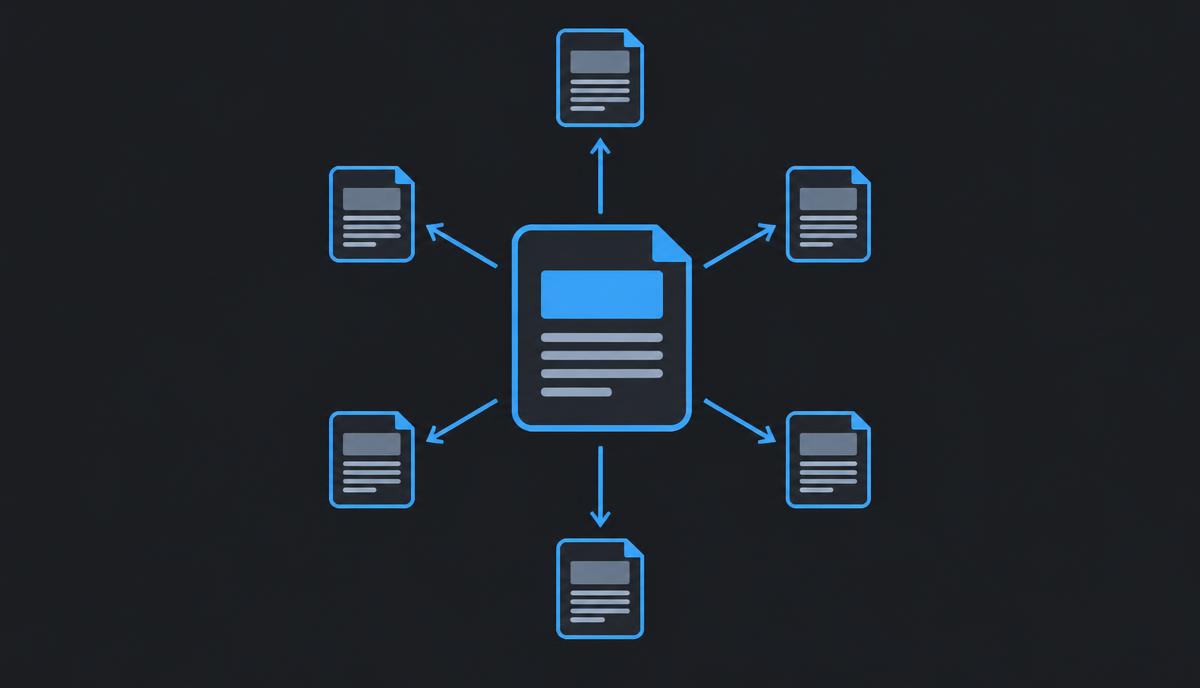
Crawlers use links as the map of your site. A page that nothing links to is a page a crawler reaches only through your sitemap, if at all, and pages discovered that way are consistently crawled less often. Ranking systems use links to pass authority: a page that has earned backlinks holds value, and every internal link out of it shares a portion of that value with the page it points to. Readers use links as navigation — and their behaviour after the click feeds back into how useful the destination looks.
The crawl and discovery job
Search engines budget how much of your site they crawl. Pages buried five clicks from the homepage, reachable only through pagination, are crawled rarely and re-crawled slowly — so updates take weeks to register. Shortening the click depth of your commercially important pages is often the single fastest way to get them re-evaluated.
The authority distribution job
Backlinks arrive unevenly. In most portfolios a handful of pages — a homepage, one viral post, one tool — hold nearly all the external authority, and the pages that need to rank hold almost none. Internal links are the plumbing that moves value from where it landed to where it is needed. If your best-linked blog post does not link to your service page, that authority is sitting in a room with the door shut.
The meaning job
This is the part that has grown in importance. Links plus anchor text describe relationships: this page is a deeper treatment of that topic, this one is the commercial version of that guide. AI answer engines lean on those relationships to work out which page on your site is the authoritative one for a given question, and which entity your brand belongs to.
Designing the structure: hubs, clusters and depth
A good internal linking strategy is really a site architecture decision made visible. Before adding a single link, decide which pages are hubs and which are supporting pages.
A hub — sometimes called a pillar page — covers a broad topic end to end and exists to rank for the head term. Around it sit cluster pages covering narrow sub-questions in depth. Every cluster page links up to the hub; the hub links down to every cluster page; cluster pages link sideways to each other where the connection is genuine. That pattern concentrates topical signal instead of scattering it across pages competing with one another.
- Keep every important page within three clicks of the homepage. If it takes five, the structure is wrong, not the crawler.
- One hub per commercial topic. Two hubs on the same topic will split links, signals and rankings between them.
- Link from high-authority pages to weak ones, not the reverse. Check which of your pages hold backlinks and use them as donors.
- Support new publications immediately: add two or three links from existing relevant pages on the day a post goes live, rather than hoping the listing page does the work.
- Prune rather than accumulate. A page with sixty links in the body passes very little through any one of them, and the reader ignores all sixty.
Anchor text rules that hold up in practice
Anchor text is the label you attach to a relationship, so the words matter more than their exact-match precision. The failure mode at both extremes is easy to describe: "click here" tells a machine nothing, and the same exact-match phrase repeated on ninety pages looks manufactured.
Be descriptive, then vary
Write the anchor as you would describe the destination to a colleague. For a page about content audits, "how to run a content audit" is right; so are "content audit process" and "auditing your existing pages". Natural variation covers more of the ways people phrase the query and reads like prose rather than SEO furniture.
Place links in body copy, not just navigation
Links inside a paragraph carry context from the sentence around them, which is exactly what makes them useful to an answer engine trying to understand the relationship. Sitewide footer and menu links are valuable for navigation and crawl access, but they appear on every page and therefore say nothing specific about any of them.
Match the link to intent
An informational article should link to the commercial page once, at the point where the reader has a reason to act — not in the opening line. Placing the commercial link after you have answered the question converts far better and does not feel like a redirect out of the content the reader came for.
Finding the gaps: orphan and under-linked pages
An orphan page has no internal links pointing to it. Every site that has published for more than a year has some, and they are usually pages someone cared about a great deal at the time. Finding them is a mechanical job you can finish in an afternoon.
- Crawl the site with a tool such as Screaming Frog or Sitebulb and compare the crawled URL list against your XML sitemap. Anything present in the sitemap but not reachable by crawl is an orphan.
- In Google Search Console, sort the Pages report for URLs with impressions but very few clicks and check their click depth — many are simply buried.
- List pages by number of inbound internal links. Any commercially important page in the bottom quartile needs attention first.
- Check that your highest-authority pages link somewhere useful. Donors with no outbound internal links are wasted value.
- Fix broken internal links and redirect chains as you go — a link into a 301 chain loses value at every hop and slows crawling.
Internal linking and AI search
Answer engines do not just extract a passage from a single page; they build a picture of what your site covers and how confident they can be that you are the right source. A tightly linked cluster makes that picture coherent. A set of disconnected posts on overlapping subjects makes it ambiguous, and ambiguity is why a competitor gets cited instead.
There is a practical second effect. When an AI engine quotes your page, the citation points to one URL. Whether that visit becomes anything depends entirely on where that page can take the reader next — which is an internal linking question, not a content one. Pages that answer well but dead-end lose the visit.
This is the part we build into content architecture rather than bolt on afterwards. When we plan a cluster through our services, the hub, the supporting posts and the links between them are designed together, so nothing is published into isolation.
How to measure whether it worked
Internal linking changes are unusually measurable because you control the timing. Record a baseline before you start: average position and impressions for the target pages, their click depth, and their inbound internal link counts.
Then watch three things over the following six to eight weeks. Crawl frequency for the newly linked pages should rise — Search Console's crawl stats show it. Average position for the destination pages typically moves before clicks do. And navigation behaviour should change: more sessions reaching the commercial page from blog content rather than from the homepage.
Expect a lag. Links have to be recrawled on both the source and destination page before anything is recalculated, so judging results after ten days will tell you nothing. Six weeks is a fair first read on a mid-sized site.
A quarterly internal linking routine
Treat this as maintenance, not a project. Once a quarter: crawl the site, list orphan and under-linked pages, identify the five pages holding the most external authority, and add contextual links from those donors to whichever commercial or cluster pages need lifting. Fix broken links and chains in the same pass, and check that every post published that quarter received at least two inbound links from older content.
That routine takes a few hours and compounds. Unlike almost every other SEO lever, nobody else has a vote in whether it happens — which is precisely why it is the first thing worth fixing.
Frequently asked questions
- How many internal links should a page have?
- There is no fixed number, but a useful working range for a long-form article is three to eight contextual links in the body, plus navigation. Judge it by whether each link genuinely helps the reader; dozens of body links dilute the value passed through each one and tend to get ignored.
- What is an orphan page and why does it matter?
- An orphan page is a page on your site that no other page links to. Crawlers reach it rarely, it receives no internal authority, and readers almost never find it. Orphan pages are common on sites that have published for a few years and are usually fixed in a single afternoon.
- Do internal links help with rankings?
- Yes, indirectly but consistently. They improve discovery and crawl frequency, distribute authority from pages that have earned backlinks to pages that need to rank, and clarify which page on your site is the authoritative one for a topic.
- Should anchor text be exact-match keywords?
- Be descriptive rather than exact-match. Use natural phrases that describe the destination and vary them across pages. Repeating one exact keyword as anchor text sitewide looks manipulative and covers fewer query variations than natural language does.
- How does internal linking relate to topic clusters?
- Topic clusters are internal linking made structural: a hub page for the broad topic, supporting pages for sub-questions, and links tying them together in both directions. The full model is covered in our guide to topical authority and topic clusters.
Keep reading
Ready to build a content engine like this?
Book a strategy call or explore our plans.
Get new guides before they're announced.
One practical guide on SEO, AI search, and content strategy whenever we publish. Unsubscribe anytime.
Mohit Gupta
Mohit Gupta is an SEO growth strategist and content specialist with over 4.5 years of experience helping B2B/B2C and SaaS companies build organic visibility and revenue. He focuses on turning complex SEO, AI search, and positioning strategies into clear, actionable insights that drive real pipeline. When not writing about organic growth systems or decoding AI search trends, he is usually studying how the best companies get found without paid ads.