Conversion Rate Optimization in 2026: How to Turn SEO Traffic Into Leads and Sales
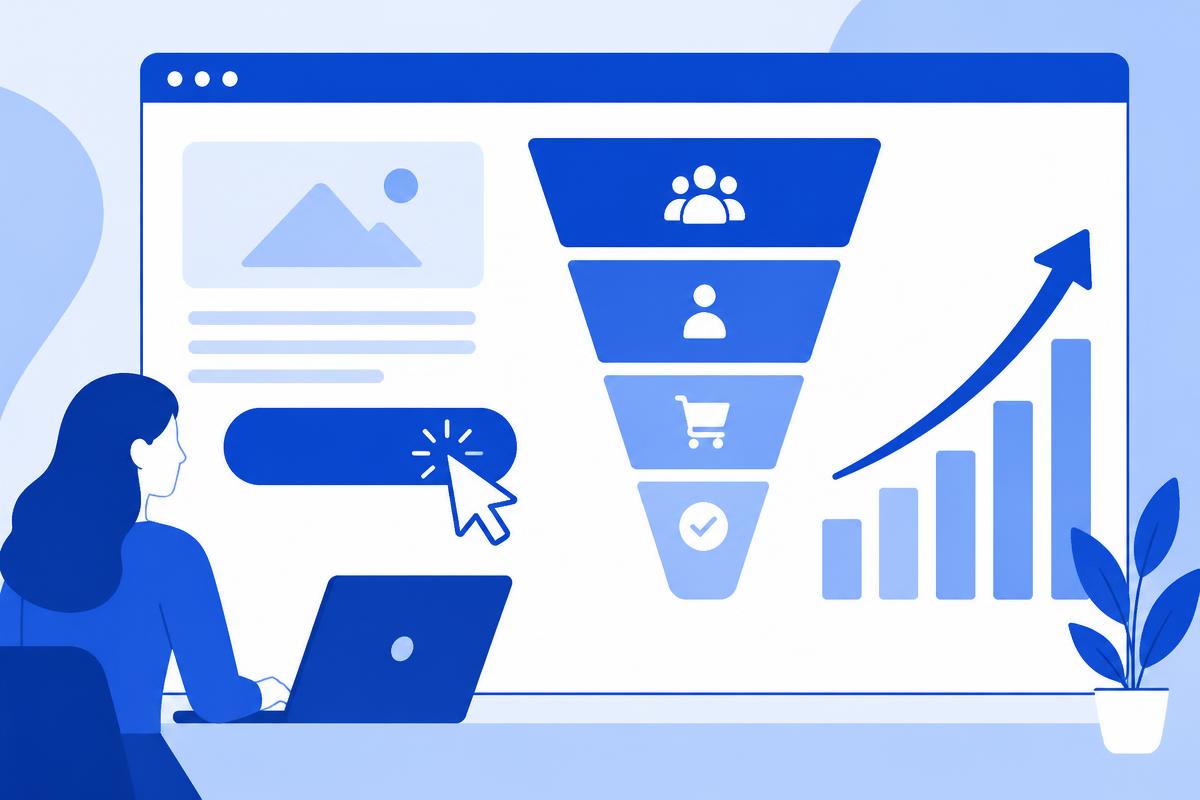
Ranking on page one feels like the finish line. It isn't. If 1,000 people land on your service page every month and only five get in touch, your SEO is working but your page isn't. Conversion rate optimization is how you close that gap.
The good news: improving conversions is usually cheaper and faster than doubling traffic. A page that converts at 2% instead of 1% gives you twice the leads from the exact same rankings.
What is conversion rate optimization (CRO)?
Conversion rate optimization is the process of improving a website so a higher share of visitors take a valuable action: filling in a form, booking a call, signing up or buying. In short, CRO meaning is simple: get more results from the visitors you already have.
A conversion can be a macro goal like a purchase, or a micro goal like a newsletter signup or a pricing page visit. Track both, because micro conversions show where people are moving toward a decision.
How to calculate conversion rate
Conversion rate = (conversions ÷ visitors) × 100. If 40 people submit your contact form out of 2,000 visitors, your conversion rate is 2%. Calculate it per page and per traffic source, not just site-wide, so you can see which pages actually need help.
Why CRO and SEO work best together
SEO brings the right people to the page; CRO persuades them to act. The two also reinforce each other. Clear headings, fast pages and content that matches search intent help rankings and conversions at the same time.
Google's own guidance on creating helpful, people-first content asks whether visitors leave feeling they achieved their goal. That is exactly what a well-optimised page delivers.
How to find where visitors drop off
- Analytics: in Google Analytics, compare landing pages by engagement rate and key events to spot high-traffic, low-converting pages.
- Search Console: find pages with strong impressions and clicks; these are your highest-value CRO targets.
- Heatmaps and session recordings: see where people stop scrolling, rage-click or ignore your call to action.
- Speed checks: run your key pages through our free [website audit tool](/tools/website-audit), because slow pages leak conversions before visitors even read.
7 CRO tactics that lift conversions
1. Match the page to search intent
Someone searching 'pricing' wants numbers, not a brand story. Put what the visitor came for in the first screen.
2. Write a clear headline and value proposition
In five seconds, a visitor should know what you offer, who it's for and why it's better. Swap vague slogans for specific outcomes.
3. Use one primary call to action
Too many choices cause hesitation. Give each page one main action, repeat it after key sections, and use action words like 'Get my free audit' instead of 'Submit'.
4. Add trust signals near the decision
Place testimonials, client logos, case results and guarantees next to forms and pricing, where doubt is highest.
5. Reduce form friction
Ask only for what you need. Cutting a form from eight fields to four often lifts completions noticeably.
6. Make pages fast and mobile-friendly
Most visitors arrive on phones. Large tap targets, readable text and quick loading are basic conversion requirements; see our Core Web Vitals guide.
7. Test, measure, repeat
Change one element at a time, run it long enough to gather meaningful data, and keep what wins. Small, steady gains compound.
Start with the pages that make you money
You don't need to optimise every URL. Begin with your homepage, service pages, pricing and top blog posts that already earn traffic. A 1% improvement there is worth more than a perfect score on a page nobody visits.
If you want SEO content built to rank and convert from day one, see our pricing plans or explore our services.
Frequently asked questions
- What is a good conversion rate?
- It varies by industry and goal, but many service websites see roughly 2–5% for lead forms. Compare against your own past numbers rather than a universal benchmark.
- What does CRO mean in marketing?
- CRO stands for conversion rate optimization: improving pages so more visitors take a desired action, such as enquiring, signing up or buying.
- Does CRO affect SEO rankings?
- Not directly, but the same improvements, like matching intent, faster pages and clearer content, tend to help both rankings and conversions. Our search intent guide explains how.
- How long does conversion rate optimization take?
- Quick fixes like clearer calls to action can show results in weeks. Proper A/B tests usually need two to four weeks per test to collect reliable data.
- Which pages should I optimise first?
- Start with high-traffic pages closest to a buying decision: pricing, service pages and landing pages, then your top-performing blog posts.
Ready to build a content engine like this?
Book a strategy call or explore our plans.
Get new guides before they're announced.
One practical guide on SEO, AI search, and content strategy whenever we publish. Unsubscribe anytime.
Mohit Gupta
Mohit Gupta is an SEO growth strategist and content specialist with over 4.5 years of experience helping B2B/B2C and SaaS companies build organic visibility and revenue. He focuses on turning complex SEO, AI search, and positioning strategies into clear, actionable insights that drive real pipeline. When not writing about organic growth systems or decoding AI search trends, he is usually studying how the best companies get found without paid ads.